Sniper 3D:Gun Shooting Games
- 4.6
- Rating
- 500.00M
- Installs
- Free
- Price
 Analysis by App-foxy
My first impression of Sniper 3D: Gun Shooting Games was that it wants to make the act of lining up a shot feel immediate rather than complicated. It is a free action game from Wildlife Studios, built around shooting challenges that can be played online and offline, with live player-versus-player play available when I want a more competitive session. The basic idea is easy to understand: find the target, steady my aim, and fire before the situation changes.
That simplicity is a large part of its appeal. I do not need to learn a long list of controls before starting, and the missions are suited to short bursts of play. At the same time, the mature 17+ rating is a useful reminder that this is not a gentle target game. Its presentation and subject matter are aimed at older players, so I would not choose it as a family-friendly shooter for younger children.
The game has been available since November 13, 2014, and its longevity is easy to understand once I spend time with it. The controls are approachable, the visual goal is clear, and each successful shot gives a small feeling of completion. Its current version is 7.5.3, while Android support begins with version 7.1, so it remains accessible to people using older compatible devices.
You May Also Like

 AccuWeather: Weather Radar
AccuWeather Review: A Quick, Clear Forecast for Everyday Decisions
For everyday plans, the best forecast is the one you can understand quickly. AccuWeather makes rain timing, radar, and local conditions easy to act on, with a few trade-offs.

 Hill Climb Racing
Why Hill Climb Racing Still Turns Crashes Into One More Run
A tiny car, a bumpy hill and one more upgrade: Hill Climb Racing keeps resurfacing because its simple chaos makes every near-miss feel personal.

 AliExpress - Shopping App
AliExpress Makes Global Shopping Feel Personal, but Shoppers Bear the Risk
AliExpress turns a global marketplace into a pocket-sized discovery engine. Its reach is useful, its shopping loop compelling, and its trade-offs easy to miss.

 Lords Mobile: Kingdom Wars
Lords Mobile Is a Kingdom-Building Routine, Not a Quick Match
A case-by-case verdict on the building, battles, device demands, and social commitments that make Lords Mobile rewarding for some players and exhausting for others.

 PDF Scanner app - TapScanner
TapScanner Makes Paperwork Easier to Capture, Check, and Share
TapScanner makes scanning with a phone feel less like a rescue operation and more like a dependable step in getting work done. Its capture tools are useful, though not flawless.

 Block Blast!
 Shows How Much a Puzzle Game Can Leave Out
A quiet grid game shows why puzzle players increasingly value instant clarity, repeatable skill and low-pressure play—and where the genre still needs to catch up.
More From Our News Desk
View All News


How the visual language turns aiming into a playable mood
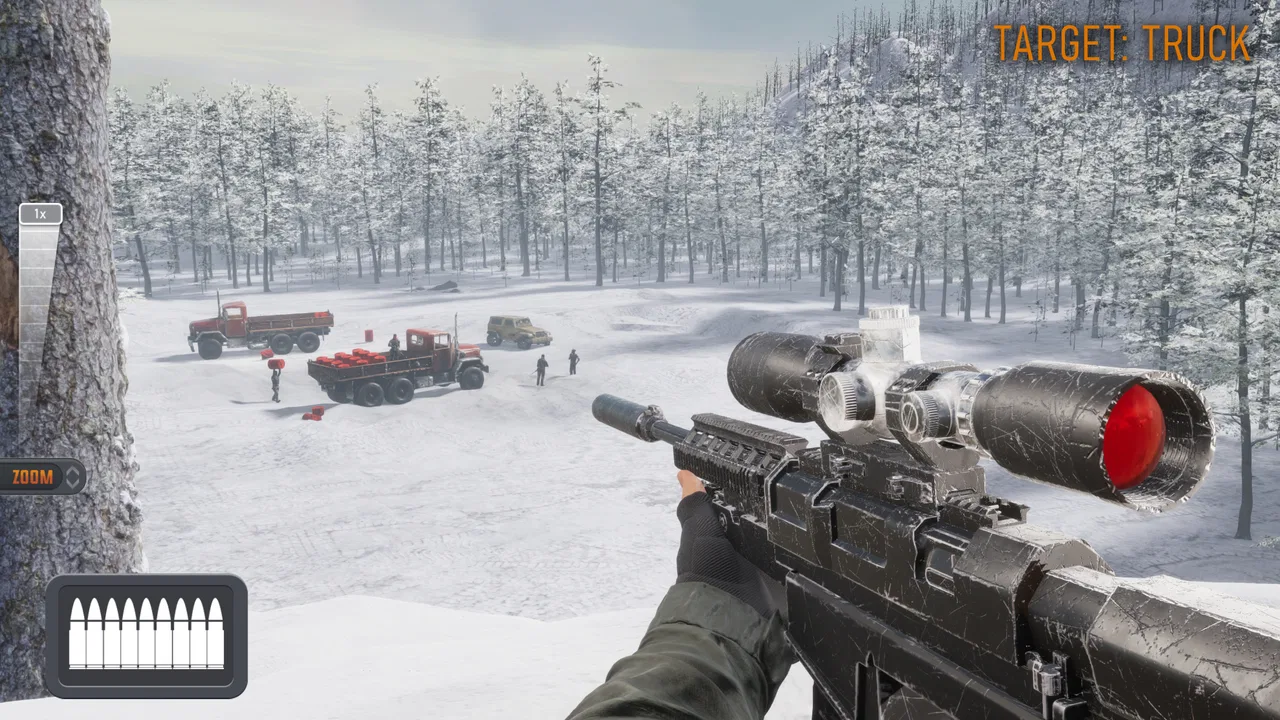
The strongest part of the presentation is the way it makes distance matter. I am not simply moving through a level and firing at everything in front of me. The viewpoint encourages me to study a scene, identify the intended target, and decide when a shot is worth taking. That pause before firing creates a very different mood from the constant forward motion found in many ordinary action games.
The art direction supports that mood by keeping attention on readable silhouettes, open sightlines, and the relationship between the target and the surrounding environment. I find this more useful than visual decoration for its own sake. When a scene is easy to read, I can concentrate on timing and precision instead of fighting the interface. The setting becomes part of the problem: distance, movement, distractions, and the moment when a target becomes exposed all affect my decision.
This also explains why the game can feel more tense than its straightforward controls suggest. Before I shoot, I am often looking for a clean opportunity rather than rushing. A crowded or active scene asks me to wait, while a simple target gives me a chance to practice control. That variation helps prevent every mission from feeling like the same tap repeated endlessly.
One useful habit I developed was to treat the opening seconds of a mission as observation time. Instead of immediately touching the firing control, I scan the scene and watch how people or objects move. This costs almost nothing, but it reduces careless shots and gives me a better sense of the level’s rhythm. For new players, that small delay is more valuable than trying to react faster from the beginning.
The visual design is not trying to turn the game into a realistic military simulator. Its purpose is clearer: create a readable shooting puzzle with enough atmosphere to make each assignment feel like an event. Players who want detailed tactical planning, broad exploration, or a large interactive battlefield may find the format narrow. I enjoy it more when I accept that its world is a sequence of focused situations rather than a place I freely explore.
Why the setting works best in short sessions
The environments are most effective when I play for a few minutes at a time. A short session gives the scenes room to feel distinct without exposing the repetition too quickly. If I continue for a long stretch, the underlying structure becomes more obvious: observe, aim, fire, and move on to the next challenge. That loop is satisfying when I am in the right mood, but it does not offer the same depth as a full-scale console or PC shooter.
This makes the game particularly suitable for an everyday situation such as waiting for an appointment or taking a short break after work. I can complete a small amount of progress without committing to a long match. The offline option is also important here. When I am somewhere with an unreliable connection, I can still use the core shooting experience instead of treating the game as useless until I am back online.
Online play changes the feeling considerably. Live PvP adds pressure because another player makes the result less predictable than a scripted target. I would use offline missions to settle into the controls and online matches when I want urgency. Mixing those modes is more enjoyable than treating one as a replacement for the other.
Sound, impact, and the rhythm between shots
Sound plays a practical role in the game’s mood. The audio emphasis around aiming and firing helps separate the quiet moment of preparation from the impact of a successful shot. I notice the contrast more than any individual sound effect: the game gives me a brief space to focus, then punctuates the decision with a sharp result.
That pattern supports the visual design. A sniper-oriented game needs restraint before the shot, otherwise the act of aiming loses its identity. Here, the pacing is built around anticipation. I am not constantly overwhelmed by action, and that gives even a simple target a little dramatic weight. The sound does not replace the mechanics, but it makes the pause before firing feel intentional.
The rhythm is also where the game differs from faster shooting alternatives. In a conventional run-and-gun title, movement and rapid reactions usually dominate. In this game, patience can be more useful than speed. I often get better results by waiting for a clearer line than by firing immediately. That is a small but meaningful shift in how I play.
There is a trade-off, though. Players who prefer continuous explosions, close-range movement, and a large amount of action on screen may experience the quiet aiming phase as slow. The same pacing that gives the game its identity can feel restrictive if I want a more energetic shooter. I would not recommend it to someone looking specifically for the constant momentum of a traditional multiplayer arena game.
For the best experience, I keep the sound at a level where the shot feedback is noticeable but not distracting. The visual reticle remains more important than audio, especially in a noisy place, but the sound helps me stay connected to the timing. I also find that playing without rushing makes the atmosphere stronger; trying to turn every mission into a speed test can flatten the tension that makes the format interesting.
How the mechanics hold together in actual play
The control scheme is designed to get me into the action quickly. Aiming is the central gesture, and the surrounding decisions are easy to understand even when a mission becomes more demanding. That accessibility is one reason the game has reached over 500 million installs and holds a 4.6 average from around 18 million ratings. Those figures suggest a very broad audience, but they do not mean every shooter fan will enjoy its focused structure.
In my experience, the most important skill is not simply accuracy. It is knowing when not to shoot. A rushed attempt can turn a manageable situation into a failure, while a short wait may reveal a cleaner opportunity. This creates a modest layer of judgment beneath the simple interface. I recommend new players practice controlled timing before worrying about fast reactions or perfect scores.
The game’s offline and online sides serve different purposes. Offline play is a reliable training ground because I can concentrate on the shooting loop without the added pressure of a live opponent. It is also the better choice for casual progress during travel or weak connectivity. Online PvP, by contrast, is where the game becomes more competitive and less predictable. I would not judge the whole experience from only one mode, because each highlights a different strength.
There is also a practical progression question that anyone considering a free game should think about. Sniper 3D is free to download and play, but it includes in-app purchases ranging from $0.99 to $224.99 per item. I would approach those purchases carefully. The most sensible way to evaluate the game is to play enough of the free experience to decide whether the aiming loop itself is enjoyable before spending money to accelerate or enhance progress.
That advice is especially relevant for players who dislike pressure around optional spending. A free entry point is convenient, but the presence of high-priced individual items means I would keep purchases protected and set a personal limit in advance. Someone who wants a completely fixed-cost experience may prefer a premium shooter with no in-app purchase structure, even if it offers less immediate access.
Where it fits among other action shooters
Compared with a standard first-person shooter, this game gives up movement freedom in exchange for a more concentrated test of observation and timing. I am not managing a large loadout while navigating a complex map in the same way I would in a conventional arena shooter. That makes it easier to pick up, but it also limits the range of strategies available to me.
Compared with a pure puzzle game, it offers more urgency and a stronger action mood. The target is not just a static problem to solve; the setting, timing, and firing moment make the decision feel physical. Players who enjoy careful aiming but do not want the full complexity of a tactical shooter may find this middle ground appealing.
For competitive players, the live PvP option is the main reason to stay after learning the basics. It gives the familiar shooting loop a human opponent and makes each mistake feel more costly. However, I would choose a deeper multiplayer shooter if my priority were team roles, map control, extensive weapon strategy, or long-term competitive mastery. This title is better for direct, focused contests than for a full esports-style system.
One non-obvious strength is how well the game separates practice from pressure. I can use offline missions to improve my sense of timing, then switch to live competition when I want to test that skill. That is a more useful routine than jumping straight into PvP and assuming every loss means the controls are poor. The game rewards learning its pace first.
Another trade-off is that the same clarity that makes the game approachable can make advanced play feel narrower. Once I understand the basic rhythm, improvement depends heavily on cleaner timing and better target reading rather than discovering many new movement techniques. That is satisfying for players who enjoy refinement, but less appealing to those who need constant mechanical variety.
Who should play, and who should skip it
I would recommend it to someone who likes shooting games but wants short, clearly defined encounters. It works well for players who enjoy watching a scene, waiting for an opening, and feeling the payoff of a precise shot. It is also a reasonable choice for someone who needs offline play during commutes, travel, or breaks when a stable connection is not guaranteed.
I would be more cautious about recommending it to younger players because of the mature 17+ content rating. I would also steer away anyone looking for a relaxed, nonviolent experience, a cooperative campaign, or a highly open-ended world. The game’s identity depends on its shooting theme, and that will not suit every audience.
Players with limited patience should try the opening experience before investing in purchases. The pace is deliberately measured, and the repeated aiming loop is the main attraction rather than a temporary introduction to something completely different. If that loop feels satisfying, the game has room to become a dependable casual shooter. If it feels repetitive after a few sessions, additional content or spending is unlikely to solve the basic mismatch.
Device compatibility is another point worth checking before installation. Android support starts at 7.1, which covers many older devices but not every phone still in use. Since this is a visually active action game, I would also close unnecessary background apps and make sure there is enough storage available for a smoother start, without assuming that every older device will perform identically.
Small habits that improve the experience
My first tip is to separate accuracy practice from speed practice. I begin by taking the cleanest shot available, even if it means waiting. Once I understand the scene, I try to shorten the delay. This keeps the early learning process from becoming a string of avoidable failures and makes improvement easier to notice.
My second tip is to use offline missions as a warm-up before live PvP. A few quiet attempts help me recover the feel of aiming and timing, while going straight into competition can make a minor mistake feel more frustrating than it needs to be. This routine also shows whether I am enjoying the core mechanics or merely chasing competitive results.
My third tip is to treat a purchase as a convenience decision, not as proof that the game is worth more of my time. I would only spend after deciding that the basic experience already works for me. Because individual in-app purchases can be substantial, setting a limit before browsing the purchase options is a practical safeguard.
Finally, I would play with the sound on when possible, especially during the first sessions. The audio contrast between waiting and firing helps me understand the intended rhythm. If I play only by tapping as quickly as possible, I lose some of the atmosphere and may mistake the game’s deliberate pacing for a control problem.
My atmosphere verdict after spending time with it
Sniper 3D: Gun Shooting Games succeeds because its art direction, sound, and mechanics point toward the same feeling: quiet observation followed by a decisive shot. The setting is readable, the audio gives the moment of impact weight, and the pacing leaves enough room for anticipation. Those elements make the game feel coherent rather than like a generic action title with a sniper theme added on top.
Its limitations are just as clear. The focused structure can become repetitive for players who need constant movement or deep tactical variety. Live PvP adds useful tension, but it does not turn the game into a broad team-based shooter. The free model is approachable, while the range of in-app purchase prices means I would play thoughtfully and avoid spending impulsively.
Wildlife Studios has built a game that is easy to start but more enjoyable when I respect its timing. I would recommend it to a friend who wants a visually clear, mature shooting game for short sessions, especially one that can move between offline practice and online competition. I would suggest a different action game to anyone seeking exploration, cooperative play, or a fixed-price experience without purchase decisions.
My final view is positive but specific: this is best understood as a focused aim-and-timing game with an action atmosphere, not as a complete replacement for every kind of FPS. When I let the scene breathe, listen for the shot’s punctuation, and use the offline mode as preparation rather than ignoring it, the experience becomes much more satisfying. Its real strength is the playable mood created between patience and impact.
FAQs for Sniper 3D:Gun Shooting Games
01What is Sniper 3D: Gun Shooting Games?
Sniper 3D: Gun Shooting Games is a mobile shooting game focused on long-range sniper missions. You take the role of a professional marksman, complete contracts, eliminate targets, and earn rewards to improve your weapons. The game combines aiming challenges, mission progression, weapon upgrades, and competitive activities, making it suitable for players who enjoy quick action with a tactical shooting theme.
02Can Sniper 3D be played offline?
Some of the game’s basic missions may be available without a constant internet connection, which is useful when you are traveling or have limited data. However, online features such as events, leaderboards, advertisements, cloud-related services, and certain updates may require internet access. Availability can vary by version and device, so it is best to launch the game online at least once after installation.
03Is Sniper 3D free to download and play?
Sniper 3D is generally free to download, but it includes optional in-app purchases. Players can progress by completing missions and collecting rewards, although paid items may help unlock weapons, upgrades, currency, or other advantages more quickly. Advertisements may also appear during gameplay. Before downloading, review the store listing and your device’s purchase settings, especially if children use the device.
04Does Sniper 3D require a powerful phone or tablet?
The game is designed for Android and iOS devices, but performance depends on your operating system version, available storage, memory, and graphics capability. Newer devices usually provide smoother aiming, faster loading, and more stable frame rates. Older phones may experience longer loading times, reduced visual quality, or occasional slowdowns. Check the current store requirements and keep sufficient free storage for updates.
05Is Sniper 3D suitable for children?
Sniper 3D contains shooting, weapon-related themes, and missions involving the elimination of targets, so it may not be appropriate for younger children. Its age rating can differ between the Google Play Store and Apple App Store, and the game may also include advertisements or optional purchases. Parents should check the current rating, review privacy permissions, and enable purchase restrictions before allowing children to play.
Pros
- Large selection of sniper rifles and upgrade options
- Short missions make it easy to play in brief sessions
- Smooth aiming controls work well on touchscreen devices
- Regular events add variety beyond the main campaign
- Offline missions are available in some game modes
Cons
- Energy limits can interrupt longer play sessions
- Weapon upgrades may require considerable grinding
- Some missions feel repetitive after extended play
- Ads can appear frequently between missions
- Advanced rifles and items are often tied to in-app purchases

Sniper 3D:Gun Shooting Games
Gallery